Cincinnati's growth along the Ohio River and into its surrounding hillsides has brought development onto slopes underlain by glacial till and colluvial soils. The city's steep ravines and historical fill areas pose real debris flow hazards after heavy rain. Our lab approaches each debris flow analysis by first characterizing the soil's gradation, plasticity, and shear strength from undisturbed samples. We combine this with site-specific hydrology data to model potential flow paths and deposition zones. Before finalizing any hillside project, we recommend a complementary slope stability study to cross-check the driving forces against the soil's residual strength parameters. This integrated method gives developers a clear picture of the risk before breaking ground.
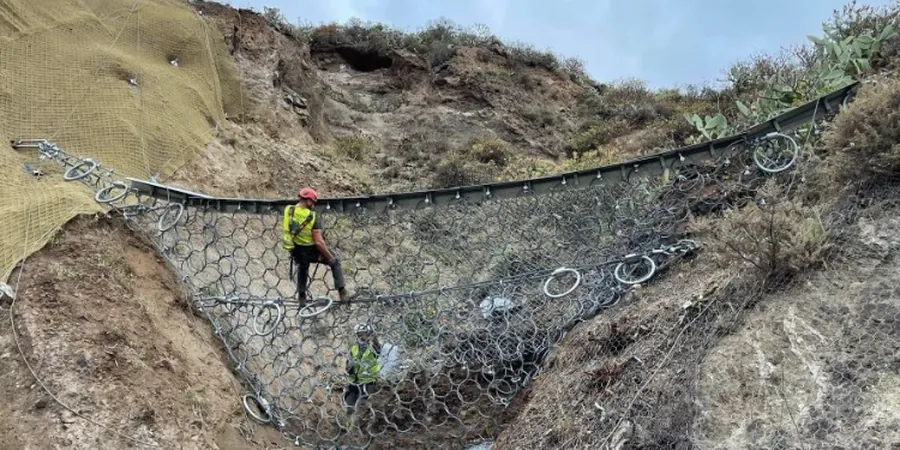
Debris flows in Cincinnati's ravines can travel over 300 meters from the source—knowing the soil's liquidity index and gradation is the first defense.
Technical details of the service in Cincinnati
Critical ground factors in Cincinnati
Cincinnati sits atop the Kope Formation and Fairview shale, which weather into clay-rich soils that can become plastic and slippery when saturated. After consecutive days of rain, these soils lose strength rapidly, and the thin colluvial mantle over bedrock can detach as a debris flow. The Ohio River valley also experiences occasional seismic shaking from the New Madrid Seismic Zone, which could trigger flows in already loose slopes. Without proper analysis, a project might underestimate the reach of a flow event, leading to damage to homes or infrastructure located hundreds of feet downslope. Our lab data provides the numbers needed to set safe setback distances and design appropriate mitigation measures.
This service complements our laboratory testing work for a complete project analysis.
Our services
Our lab offers three core debris flow analysis services tailored to Cincinnati's hillside geology. Each includes field sampling, laboratory testing, and a detailed report with runout modeling.
Soil Characterization for Debris Flow Susceptibility
Complete index property testing including gradation, Atterberg limits, and natural moisture content. We classify the soil per USCS and identify the liquidity index to flag flow-prone zones.
Shear Strength Testing for Flow Modeling
Direct shear and triaxial tests on remolded and undisturbed samples to measure peak and residual friction angles. These values feed into runout distance and velocity models.
Runout and Deposition Zone Analysis
Using laboratory-derived parameters, we run FLO-2D or similar models to predict flow paths, deposition areas, and impact forces. The report includes hazard maps for the site.
Common questions
How much does a debris flow analysis cost in Cincinnati?
For a typical residential hillside lot, the full analysis including field sampling, lab tests, and runout modeling ranges between US$1,160 and US$4,450. The final price depends on the number of samples, the complexity of the slope, and whether additional tests like triaxial shear are needed.
What soil types in Cincinnati are most prone to debris flows?
Colluvial soils derived from the Kope Formation and Fairview shale—typically silty clays with low plasticity (CL-ML) and high natural moisture—are the most susceptible. When these soils have a liquidity index above 0.8 and fines content below 30%, they can mobilize quickly after heavy rainfall.
How long does the laboratory phase of a debris flow analysis take?
The lab work typically takes 10 to 15 business days from sample receipt. This includes gradation, Atterberg limits, and direct shear testing. If triaxial or consolidation tests are required, add another 5 to 7 days.
Do you provide runout modeling as part of the analysis?
Yes. We use FLO-2D and empirical models based on the laboratory data to predict flow distance, velocity, and deposition zone. The report includes a hazard map showing the likely impact area on your site plan.