Cincinnati sits on a sequence of glacial outwash and alluvial terraces along the Ohio River, where organic-rich soils —peat, muck, and buried marsh deposits— can reach thicknesses of 10 to 25 feet in the Mill Creek Valley and along the Little Miami floodplain. These materials have high compressibility and low shear strength, so we always start with a site-specific organic soil management plan before any foundation design. Our team runs moisture content, organic content (ASTM D2974), and Atterberg limits on every organic horizon to classify the material properly. For projects on the west side near Sedamsville, where historical fill overlies soft organics, we combine field sampling with a density test using the sand cone method to baseline compaction levels before treatment.
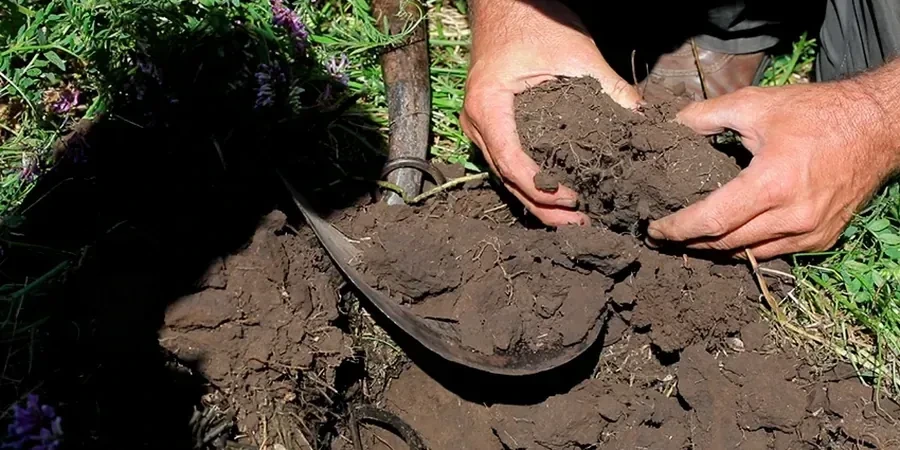
Peat and muck in Cincinnati's Mill Creek Valley can settle up to 40% under load if left unmanaged — early testing is the only way to avoid structural damage.
Technical details of the service in Cincinnati
Critical ground factors in Cincinnati
ASCE 7 and IBC Chapter 18 require that foundations on organic soils account for long-term secondary compression and potential differential settlement. In Cincinnati, where organic layers often sit above stiff glacial till, the risk is uneven consolidation: a building may settle several inches on the organic zone while adjacent areas on till barely move. We address this by running consolidation tests on undisturbed samples and specifying either full removal or controlled surcharging. The 2020 Cincinnati Building Code amendments explicitly reference ASTM D4546 for one-dimensional swell/settlement of organic soils, so compliance starts with proper lab data.
This service complements our laboratory testing work for a complete project analysis.
Our services
We offer four core services for organic soil management in Cincinnati, each tailored to the material's composition and the project's load requirements.
Organic Content Classification & Lab Testing
Full suite of index tests including loss-on-ignition, fiber content, pH, and specific gravity. We classify the organic soil per ASTM D2487 (Group OL, OH, or PT) and provide consolidation parameters for settlement analysis.
Excavation & Replacement (Shallow Organics)
For organic layers less than 8 feet thick, we design and oversee removal down to competent mineral soil, backfilling with compacted granular fill. Includes test pits and compaction control per ASTM D1557.
Preloading with Vertical Drains
For deep organic deposits (10-25 ft), we install prefabricated vertical drains and apply staged surcharge fills. Settlement plates and piezometers track consolidation progress until residual settlement meets design criteria.
In-Situ Shear Strength Testing
Field vane shear tests (ASTM D2573) and hand penetrometer readings on organic slits and peats to establish undrained strength profiles for slope stability and bearing capacity calculations.
Common questions
How do you identify organic soils in the field during a site investigation in Cincinnati?
We look for dark color, fibrous texture, and a distinct odor when the sample is broken. In the lab we run loss-on-ignition at 440C per ASTM D2974 to quantify organic content. A value above 20% typically indicates peat or highly organic soil requiring special management.
What is the typical cost range for organic soil management in Cincinnati?
For a standard residential or small commercial lot, organic soil management including testing and treatment runs between US$910 and US$2,670. Larger sites with deep peat or vertical drains can exceed that range depending on volume and access.
Can I build directly on organic soil if I use a deep foundation like piles or caissons?
Yes, but only if the piles extend through the organic layer into competent bearing strata —typically the glacial till or bedrock found below the alluvium. You still need to manage negative skin friction from the settling organic zone. We always recommend a settlement analysis before finalizing the foundation type.
How long does preloading with vertical drains take for organic soils?
It depends on the thickness and permeability of the organic layer. In Cincinnati's muck deposits, we typically see 70-90% consolidation within 3 to 8 months with drain spacing of 4 to 6 feet. We monitor with settlement plates and pore pressure transducers to confirm when the surcharge can be removed.
What happens if organic soil is left untreated under a slab-on-grade?
You risk differential settlement, slab cracking, and long-term creep that can continue for years. Organic soils can lose 30-50% of their volume under load. We have seen cases in Cincinnati where untreated peat under warehouse slabs caused floor elevations to drop 4 to 6 inches within 18 months, requiring costly underpinning.