We were called to a site in the West End of Cincinnati where a five-story apartment building was planned on fill that had been placed decades ago over the old Mill Creek channel. The general contractor wanted a quick assessment of lateral stress and stiffness before designing the shoring system. That is exactly where the Flat Dilatometer Test (DMT) shines. Instead of relying solely on blow counts from a standard penetration test, we can measure horizontal stress index (Kd) and material index (Id) directly in the soil profile. In that case, the DMT revealed a soft zone at 18 feet that an SPT had missed entirely. The information allowed the structural engineer to revise the foundation depth and avoid a differential settlement problem that would have cost much more to fix later. We routinely combine the DMT with a resistivity survey when we need to map stratigraphy across the whole site before moving to point-specific tests like the pressuremeter or a plate load test for bearing capacity verification.
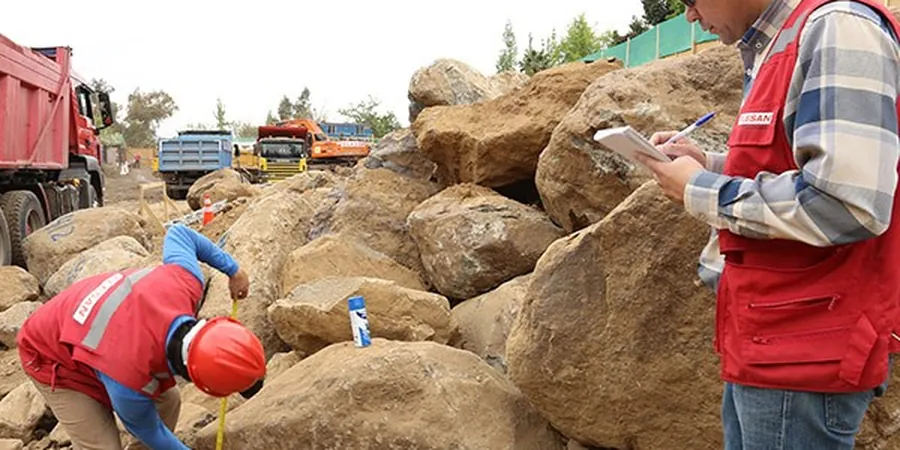
The DMT revealed a soft zone at 18 feet that a standard SPT had missed entirely, saving the project from an expensive differential settlement.
Technical details of the service in Cincinnati
Critical ground factors in Cincinnati
A common mistake we see in Cincinnati is relying only on SPT N-values to design deep foundations in the glacial till. The till here is often heavily overconsolidated with high lateral stresses, and a standard split-spoon sample can be disturbed by gravel or cobbles, giving an artificially low blow count. That leads to over-designed piles or, worse, a foundation that underestimates the soil's true capacity. We have seen contractors pour extra concrete because they thought the soil was looser than it actually was. Running a DMT profile in one of those boreholes would have shown a Kd above 6 in the till, indicating high lateral confinement and stiffer behavior. That insight saves both time and material. When the design team sees actual horizontal stress data, they trust the geotechnical model more and avoid the conservative overdesign that costs money without adding safety.
This service complements our laboratory testing work for a complete project analysis.
Our services
Our laboratory offers a complete suite of In-Situ services in Cincinnati, with the DMT as a core tool for projects requiring high-quality deformation and stress data.
Flat Dilatometer Test (DMT) Profiling
Continuous or discrete DMT soundings from 0 to 30 meters depth, with real-time data acquisition and interpretation of Id, Kd, M, and K₀. Suitable for clay, silt, sand, and till profiles typical of the Cincinnati region.
DMT-Based Settlement & Bearing Capacity Analysis
Using constrained modulus from DMT readings to compute immediate and long-term settlements under shallow or deep foundations, calibrated with local correlations from glacial till and alluvial sites.
Lateral Stress & Earth Pressure Coefficient (K₀) Assessment
Direct measurement of horizontal stress for retaining wall design, braced excavations, and anchor systems. Critical for projects in the urban core where existing structures are close.
Common questions
How does the Flat Dilatometer Test (DMT) compare to a standard penetration test (SPT) for Cincinnati soils?
The SPT gives a blow count that reflects resistance to driving, but it can be affected by gravel or cobbles in glacial till. The DMT measures lateral stress and stiffness directly through a thin blade, providing continuous profiles of modulus and stress state. In Cincinnati's heterogeneous soils, the DMT often detects soft layers or stiff zones that the SPT averages out. We use both tests together: the SPT for soil classification and sample recovery, and the DMT for deformation and stress parameters.
What is the typical cost range for a Flat Dilatometer Test in Cincinnati?
For a standard DMT sounding to 30 meters depth, including mobilization within the Cincinnati metro area, data processing, and a summary report, the cost typically falls between US$870 and US$930. The final price depends on site access, number of soundings, and whether the test is combined with other in-situ methods like SPT or vane shear. We provide a firm quote after a brief site visit.
In which types of projects is the DMT most useful in Cincinnati?
We see the DMT used most often for foundation design in soft clays near the Ohio River, for shoring and excavation support in the downtown area where old fills are common, and for settlement analysis under large mat foundations or embankments. It is also valuable for pavement design on alluvial terraces and for evaluating lateral stresses in overconsolidated till before installing tiebacks or soil nails.
How long does it take to run a DMT and get results?
A single DMT sounding to 30 meters takes about one hour in the field, including setup and retrieval. We process the data the same day and can provide preliminary profiles of material index and horizontal stress index within 24 hours. The full report with interpreted parameters (M, K₀, Su, settlement estimates) is typically delivered in three to five business days, depending on project urgency.