In Cincinnati, the soils along the Ohio River valley present a unique mix of alluvial silts and glacial till, which means geotextile specification has to account for both high fines content and variable water tables. Many contractors bring us samples thinking a standard non-woven will work for every separation layer, but the reality is that filtration requirements change dramatically between a hillside retaining project in Mount Adams and a flat parking lot near the riverfront. We run ASTM D4751 apparent opening size and ASTM D4491 permittivity tests on candidate fabrics before writing the spec, so you don't end up with clogging or piping. For projects on soft ground, we often combine this analysis with a plate load test to confirm subgrade bearing capacity before the fabric goes down.
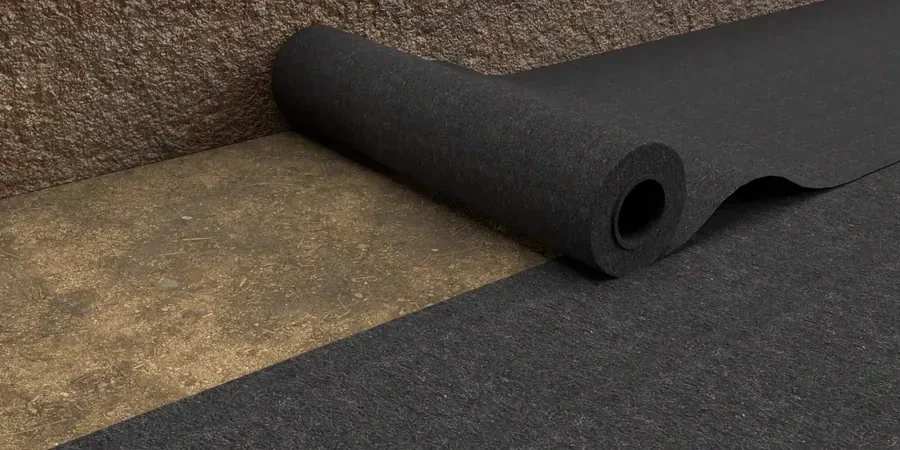
The right geotextile spec depends on actual AOS and permittivity data from the project soil, not a catalog generic.
Technical details of the service in Cincinnati
Critical ground factors in Cincinnati
Cincinnati sits in seismic category C per IBC 2021, and the alluvial soils along the Mill Creek Valley can liquefy under strong shaking. A geotextile specified only for static separation will not hold if the ground loses shear strength during an earthquake. The bigger risk is that contractors install a fabric with an AOS too tight for the native silt, causing a perched water table and subgrade softening. We have seen pavement failures in Blue Ash where a 4 oz non-woven clogged within two years because the permittivity was below what the fines required. Proper specification avoids that entirely.
This service complements our laboratory testing work for a complete project analysis.
Our services
We offer two complementary services to finalize your geotextile specification in Cincinnati:
Fabric Selection and Testing
We test candidate geotextiles against your site soil using AOS, permittivity, and strength parameters. The result is a written spec that matches the fabric to the subgrade and loading conditions.
On-Site Installation Inspection
Our technicians verify overlap, anchoring, and coverage during placement. We confirm the fabric meets the specified properties before the aggregate or backfill goes on top.
Common questions
What is the difference between woven and non-woven geotextile specification?
Woven fabrics have higher tensile strength and are used for reinforcement and paved road separation; non-wovens have higher permittivity and are preferred for drainage and filtration. Your soil gradation determines which one fits.
How much does a geotextile specification service cost in Cincinnati?
The cost for a full specification with soil testing and fabric recommendations typically ranges between US$400 and US$1,120, depending on the number of candidate fabrics and site visits required.
Do I need a geotextile spec for a residential driveway?
Yes, if the subgrade is clay or silt with a CBR below 3. A proper specification prevents rutting and extends the driveway life by keeping the aggregate separate from the soft soil underneath.
What ASTM standards apply to geotextile specification?
The main ones are ASTM D4751 for AOS, ASTM D4491 for permittivity, ASTM D4632 for grab tensile, and ASTM D6241 for puncture. We also use ASTM D4355 for UV resistance when the fabric will be exposed.
Can you specify a geotextile for temporary erosion control?
We can. We select fabrics based on flow rate and sediment retention efficiency, using ASTM D4491 and D4751 data. We also check UV exposure time so the fabric lasts through the construction phase.