When you watch a crawler excavator carve out a 40-foot-deep pit in Cincinnati's downtown, you realize the machine is just the visible part. Behind it, the geotechnical design of deep excavations relies on understanding the city's unique geology: thick glacial till over interbedded shales and limestones of the Ordovician. The team on site sets up inclinometer casings along the soldier pile wall before the first bucket of soil is removed. This real-time monitoring, combined with the presurometer test to measure lateral stiffness at depth, gives engineers the confidence to design safe shoring systems without overbuilding. The goal is always to keep adjacent buildings and streets stable while the excavation proceeds.
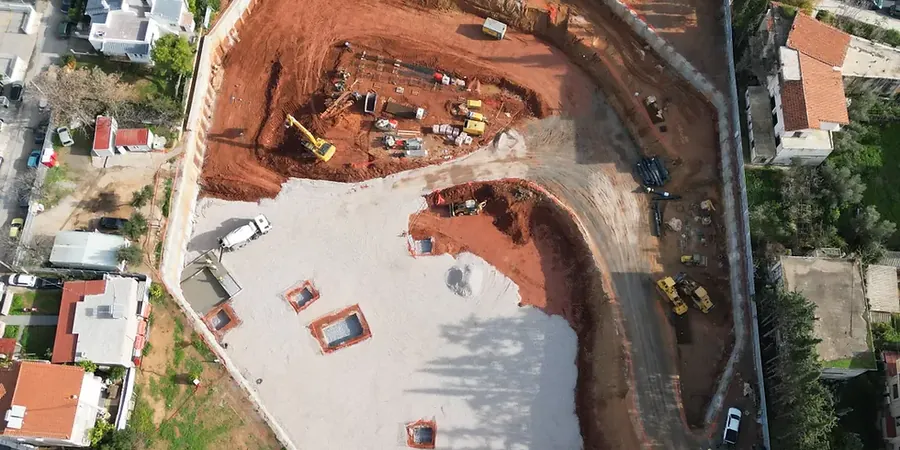
In Cincinnati's downtown, the glacial till over shale creates lateral earth pressures that can exceed Rankine active estimates by 30 percent if not properly characterized.
Technical details of the service in Cincinnati
Critical ground factors in Cincinnati
Cincinnati's urban core grew rapidly in the mid-19th century, with buildings erected on filled ravines and steep hillsides. Those historic fills are notoriously variable: old timber, brick rubble, and loose soil compacted only by time. When a deep excavation cuts through one of these filled zones, the risk of sudden collapse or excessive lateral movement is real. The geotechnical design of deep excavations must account for these legacy conditions by requiring test pits or sonic drilling along the wall alignment. In our experience, a single undocumented void can change the entire shoring strategy. That is why every project starts with a thorough site history review and a targeted subsurface investigation.
This service complements our laboratory testing work for a complete project analysis.
Our services
To support safe and cost-effective excavations, we provide two specialized geotechnical services tailored to Cincinnati's ground conditions.
Shoring and Support System Design
We design soldier pile and lagging walls, sheet pile walls, and secant pile walls suited to the soil and rock profiles typical of the Cincinnati area. Each design includes tieback or internal bracing analysis, lateral load calculations, and deflection estimates.
Instrumentation and Monitoring Plans
Our team specifies inclinometers, piezometers, and settlement points to track performance during excavation. Real-time data allows adjustments to shoring before movements exceed allowable thresholds, reducing risk to adjacent structures.
Common questions
How deep can a deep excavation go in Cincinnati without a tieback system?
In cohesive glacial till, cantilevered soldier pile walls can typically reach 12 to 15 feet without tiebacks. Beyond that depth, the lateral earth pressures exceed the wall's moment capacity unless bracing or anchors are added. The exact limit depends on soil strength and the adjacent surcharge.
What is the typical range for geotechnical design of deep excavations in Cincinnati?
This varies with excavation depth, soil complexity, and the number of instrumentation points.
Do deep excavations in Cincinnati require seismic design?
Yes. Cincinnati lies in a moderate seismic zone (ASCE 7 Site Class C or D in many areas). The design must check for liquefaction in loose saturated sands and account for dynamic lateral pressures on the shoring wall during an earthquake event.