Cincinnati sits on a complex sequence of glacial till, river terraces, and interbedded shales from the Ordovician period. The Ohio River valley brings high water tables in many low-lying neighborhoods, while the hills — Mount Adams, Price Hill — expose clayey silts and weathered bedrock. Infiltration test results here vary dramatically within a single block. A Porchet or double-ring infiltrometer test provides the site-specific saturated hydraulic conductivity needed for stormwater design, septic system sizing, or infiltration basin feasibility. Before committing to a drainage layout, coupling the test with a georadar GPR survey helps identify buried utilities or subsurface anomalies that could influence flow paths. Our field crew follows ASTM D3385-18 for double-ring procedures and adapts the Porchet method for shallow excavations where the water table sits less than 1.5 m deep.
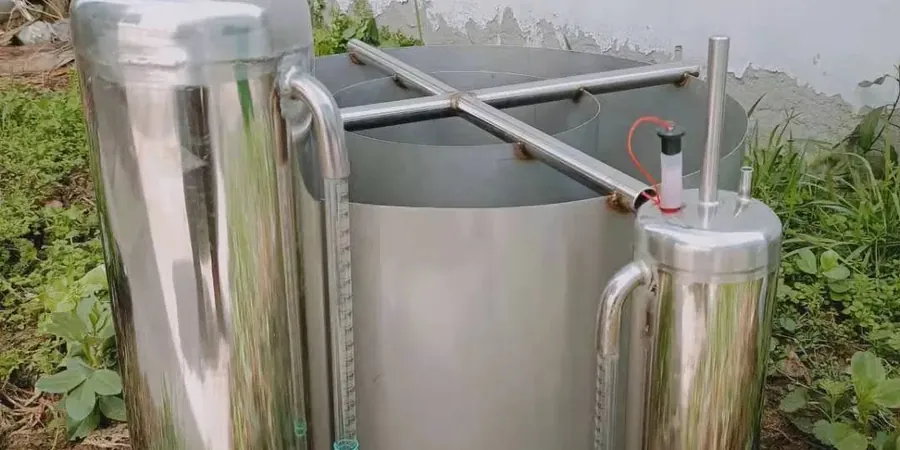
Infiltration rates in Cincinnati vary 50x between glacial till on the hilltops and alluvial sand along the Mill Creek valley.
Technical details of the service in Cincinnati
Procedure video
Critical ground factors in Cincinnati
Many times we see drainage designs in Cincinnati that assume a uniform infiltration rate across the entire lot. That assumption fails when you hit a clay lens from the Fairview formation. One neighbor gets a 2 cm/hr rate; another, 0.1 cm/hr. The risk: a basin that never drains or a septic field that fails in the first wet season. Infiltration testing at multiple depths and locations reduces that gamble. We also flag cases where the seasonal high water table sits above the test depth — that invalidates any downward flow assumption and calls for a different strategy. Documenting the exact test conditions and soil profile is part of every report we deliver.
This service complements our laboratory testing work for a complete project analysis.
Our services
We support stormwater and geotechnical designs with two infiltration testing options tailored to Cincinnati's varied ground conditions.
Double-Ring Infiltrometer Test
Full ASTM D3385-18 procedure with 30/60 cm ring setup, constant head measurement, and steady-state hydraulic conductivity. Ideal for rain gardens, infiltration basins, and retention systems where regulatory compliance requires documented Ksat values.
Porchet Infiltration Test
Single-borehole method for shallow groundwater or constrained access. We drill a 100–150 mm diameter hole to the target depth, pre-saturate the soil, and record head drop over time. Suitable for septic system sizing, small-scale drainage, or preliminary site screening.
Common questions
How many infiltration test points are needed for a residential lot in Cincinnati?
For a typical 0.5-acre lot, we recommend at least two test points at different depths. If the soil changes between the topsoil and the subgrade, a third point at the interface helps capture the limiting layer. Local stormwater manuals often require one test per 500 m² of contributing drainage area.
What is the difference between the Porchet and double-ring methods?
The double-ring method uses concentric rings to isolate vertical flow and minimize lateral spreading, giving a more accurate Ksat for design. The Porchet test is simpler and quicker — a single borehole with no outer ring — but it measures combined vertical and radial flow, which can overestimate rates in clayey soils. Choose double-ring for regulatory submittals; Porchet for preliminary screening.
Does Cincinnati's clay-rich soil affect infiltration test results?
Yes, significantly. Glacial till and weathered shale produce Ksat values often below 0.5 cm/hr. In those conditions, the double-ring test may take 4 to 6 hours to reach steady-state. We pre-saturate the soil for 24 hours when possible, because dry clays swell and give artificially low readings. The Fairview formation, in particular, can fool you into thinking the soil drains well until it wets up.
How much does an infiltration test cost in Cincinnati?
A typical double-ring infiltrometer test runs between US$270 and US$410 per point, depending on depth and access. Porchet tests are slightly lower, around US$220 to US$350. For multiple points on the same site, the per-point price drops. We provide a flat rate quote after a site walk-through.
Can infiltration testing be done during winter in Cincinnati?
Technically yes, but frozen ground and snow cover make results unreliable. The Ohio EPA recommends testing between April and October when the soil is thawed and at field moisture. If you need winter testing, we can excavate a test pit and install a temporary shelter to keep the soil from freezing during the test duration.