Geotechnical laboratory testing forms the analytical backbone of every safe and durable construction project in Cincinnati. This category encompasses the physical and mechanical evaluation of soil and rock samples recovered from boreholes, test pits, and trenching operations. By quantifying properties such as shear strength, compressibility, grain size distribution, and moisture-density relationships, laboratory programs transform disturbed and undisturbed samples into reliable engineering parameters. In a city defined by its seven hills, river terraces, and deeply incised valleys, understanding subsurface behavior through rigorous testing is not optional—it is fundamental to managing slope stability, foundation design, and earthwork quality control.
Cincinnati's geology presents a layered and often challenging profile that directly influences laboratory testing priorities. The region is underlain by Ordovician-age bedrock—primarily limestone and shale of the Cincinnatian Series—which is frequently mantled by colluvium, glacial outwash, and alluvial deposits along the Ohio River and its tributaries. Hillside creep and ancient landslide debris are common throughout the basin, creating zones of low-strength, moisture-sensitive soils. These conditions demand precise determination of drained and undrained shear strength parameters, consolidation characteristics, and swell potential. A direct shear test is often employed to evaluate the frictional resistance of colluvial silty clays, while an oedometer consolidation test quantifies settlement magnitudes and rates in compressible alluvial strata beneath proposed embankments and shallow foundations.
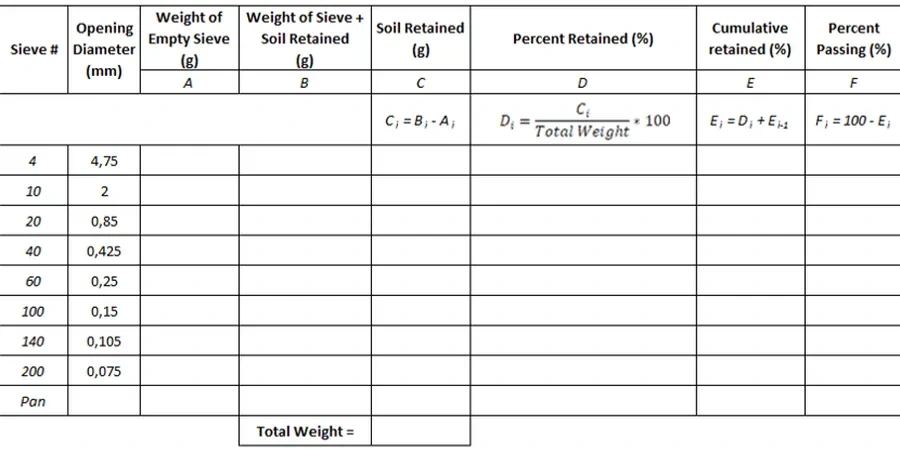
Laboratory procedures in Cincinnati must align with applicable national standards to ensure regulatory compliance and technical defensibility. The American Society for Testing and Materials (ASTM) governs the vast majority of geotechnical test methods used in the United States, with key standards including ASTM D3080 for direct shear, ASTM D2435 for incremental consolidation, ASTM D2487 for the Unified Soil Classification System (USCS), and ASTM D2166 for unconfined compressive strength. Projects involving federal or state transportation funding must also adhere to AASHTO specifications, particularly AASHTO T 88 for particle size analysis and AASHTO T 99/T 180 for moisture-density relations. Local building codes in the City of Cincinnati and Hamilton County reference the Ohio Building Code, which in turn adopts the International Building Code (IBC) and requires geotechnical reports to be based on laboratory data that meet these consensus standards.
The demand for comprehensive laboratory testing spans a wide spectrum of project types across the Cincinnati metropolitan area. Deep excavations for mid-rise and high-rise structures in the Central Business District require careful assessment of lateral earth pressures and base stability, often supported by a detailed soil mechanics study that integrates multiple test results. Transportation infrastructure—including retaining walls along I-71, bridge pier replacements over the Mill Creek, and runway expansions at Cincinnati/Northern Kentucky International Airport—relies heavily on unconfined compression test data to evaluate cohesive soil strength for bearing capacity and pavement subgrade reaction. Residential and commercial developments on the city's hillsides routinely trigger the need for soil classification (USCS/AASHTO) to identify expansive or collapsible soils that could compromise foundation performance. Landfill expansions, stormwater detention basins, and slope stabilization projects further depend on permeability, compaction, and shear strength testing to satisfy Ohio EPA and local conservation district requirements.
Common questions
What geotechnical laboratory tests are typically required for a standard foundation design in Cincinnati?
A standard foundation investigation in Cincinnati generally includes moisture content, Atterberg limits, grain size analysis with hydrometer for USCS classification, and unconfined compression or unconsolidated-undrained triaxial tests on cohesive samples. Consolidation testing is added when compressible alluvial or lacustrine soils are encountered. These tests establish bearing capacity, settlement potential, and appropriate foundation type in accordance with the Ohio Building Code and ASTM standards referenced by local jurisdictions.
How do Cincinnati's local soil conditions influence the selection of laboratory shear strength tests?
Cincinnati's widespread colluvial and landslide-prone hillside soils require careful selection of shear strength tests. Drained direct shear tests on remolded or undisturbed samples determine residual and peak friction angles critical for slope stability analysis. For saturated cohesive soils in river valleys, undrained strength from triaxial compression or unconfined compression tests often governs short-term excavation and foundation loading conditions.
What accreditation or quality assurance standards should a Cincinnati geotechnical laboratory maintain?
Laboratories performing geotechnical testing for Cincinnati projects should maintain accreditation through the AASHTO Accreditation Program (AAP) or the US Army Corps of Engineers Materials Testing Center. Key quality assurance elements include calibrated equipment traceable to NIST, participation in proficiency sample programs, and adherence to ASTM and AASHTO test method requirements. These credentials are typically stipulated in project specifications for public and institutional work.
When is a soil classification test sufficient versus when is a full soil mechanics study necessary?
A basic soil classification test identifying USCS group symbol and AASHTO classification may suffice for preliminary site characterization or low-risk projects like single-family residences on competent soils. A comprehensive soil mechanics study becomes necessary for deep excavations, embankments over soft ground, or hillside developments where shear strength, consolidation, and permeability parameters are essential inputs for advanced geotechnical analysis and numerical modeling.