One of the most common oversights we see from contractors in Cincinnati is assuming uniform soil conditions across a building footprint. A developer recently brought us in after a three-story apartment slab had already cracked along the east wing, while the west side showed no distress. The culprit was a buried stream channel filled with soft, compressible silt that the geotechnical report had missed. Differential settlement analysis is not optional when the Ohio River Valley deposits can shift from stiff clay to loose sand within twenty feet. We combine borehole data with settlement monitoring to quantify those variations before concrete is poured, and often pair the assessment with a stability analysis for retaining walls when the site involves cut-and-fill transitions.
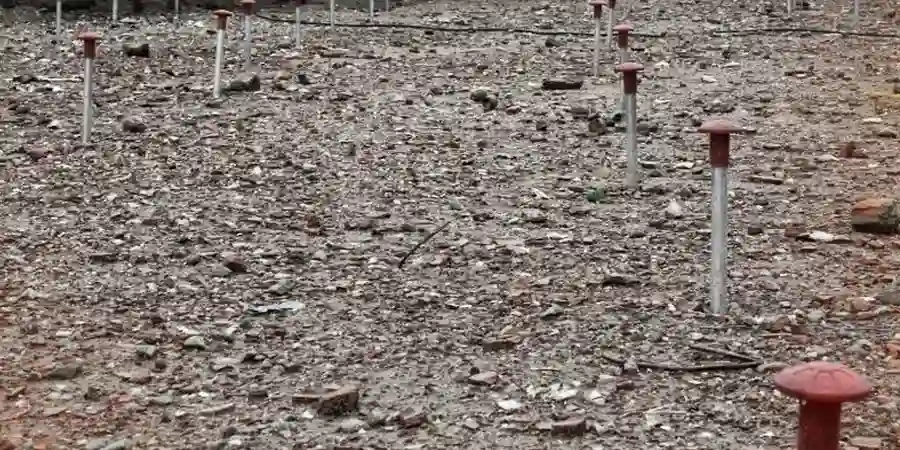
A differential movement as small as ¾ inch can crack load-bearing walls and misalign elevator rails if not identified before foundation design.
Technical details of the service in Cincinnati
- Plate load tests at multiple locations to capture stiffness variability
- Settlement monitoring with survey hubs during and after construction
- Finite-element modeling of foundation-soil interaction under service loads
Procedure video
Critical ground factors in Cincinnati
Cincinnati sits on a mix of Illinoian glacial till, lacustrine clays, and alluvial deposits along the Mill Creek and Ohio River corridors. The variability is the hazard. A high-plasticity clay layer can have a plasticity index above 40, meaning it shrinks and swells significantly with moisture changes. If that layer is only present under one corner of a building, the differential movement can exceed 2 inches within two years. The city’s seismic design category (C per IBC 2021) adds another layer of risk: even moderate ground motion can amplify differential settlement when soft soils are present. We address this by correlating settlement potential with site-specific vs30/" data-interlink="1">shear wave velocity profiles.
Our services
We provide a complete suite of services tailored to differential settlement analysis in Cincinnati, from field testing to numerical modeling.
Consolidation & Settlement Testing
One-dimensional consolidation tests (ASTM D2435) on undisturbed Shelby tube samples, plus oedometer creep tests for long-term secondary compression in organic-bearing soils.
In-Situ Stiffness Profiling
Plate load tests (ASTM D1195) and pressuremeter tests to measure modulus of subgrade reaction and stress-strain behavior at multiple depths across the site.
Numerical Modeling & Monitoring
Finite-element settlement analysis using PLAXIS 2D/3D, coupled with real-time survey monitoring to validate predictions during and after construction.
Common questions
What is the typical cost for a differential settlement analysis in Cincinnati?
For a standard commercial project, the analysis ranges between US$780 and US$1,970 depending on the number of boreholes, laboratory tests, and modeling complexity. Larger or multi-zone sites may fall at the higher end of this range.
How many test locations do I need to capture differential movement across my site?
For a 20,000 ft² building footprint in Cincinnati, we recommend a minimum of four boreholes distributed to cover each distinct soil unit identified from a preliminary site reconnaissance. If a buried stream channel or old fill is suspected, we add one or two extra locations.
Can differential settlement occur on a site with uniform soil?
Yes. Even in uniform soil, differential settlement can happen when foundation loads vary significantly between columns, or when the water table drops unevenly after heavy rain. We model these scenarios using consolidation theory and load distribution analysis.
What is the difference between total settlement and differential settlement?
Total settlement is the vertical movement of an entire structure, while differential settlement is the relative movement between two points. Differential settlement is more critical because it causes tilting, cracking, and structural distress even if total settlement is within limits.