In Cincinnati, many times we see that the local soil profile — a mix of glacial till, alluvial deposits from the Ohio River, and weathered shale — can shift dramatically within a single block. That variability is why a proper factor of safety (FS) calculation is not just a number on paper. It is the core decision tool that tells you how much load your ground can handle before failure. Our team runs this calculation using direct shear and triaxial test results (ASTM D3080, ASTM D2850) combined with site-specific shear strength parameters. For projects near the Mill Creek Valley or on the steeper hillsides of Mount Adams, we adjust the FS to account for both short-term undrained conditions and long-term drained scenarios. The result is a safety margin that aligns with IBC requirements and your construction budget.
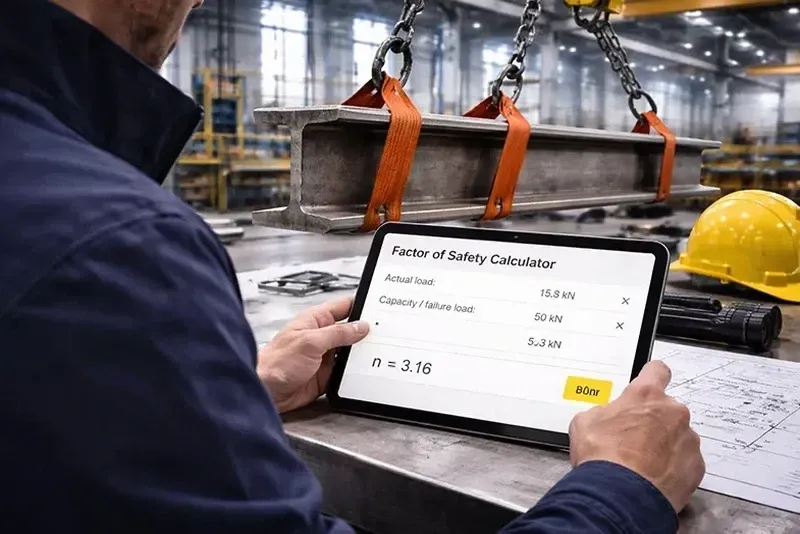
A factor of safety below 1.5 for a permanent retaining wall in Cincinnati's clay-rich till is a red flag that cannot be ignored.
Technical details of the service in Cincinnati
Critical ground factors in Cincinnati
Cincinnati sits in a humid continental climate with about 42 inches of annual rainfall, and that moisture drives long-term changes in soil strength. The high-plasticity clays (CH) found in areas like Hyde Park and Oakley can lose up to 40% of their undrained shear strength when saturated. If your factor of safety (FS) calculation does not account for this seasonal softening, the foundation or retaining wall could settle or rotate over time. We also see risk from the underlying Ordovician shale — when it weathers, it turns into a slickensided clay that behaves like a slip plane. Getting the FS right means running tests on both intact and remolded samples, then applying partial factors from ASCE 7-16. Skimping on this step is how small cracks turn into structural claims.
This service complements our laboratory testing work for a complete project analysis.
Our services
We provide two complementary services that deliver the data you need for a defensible factor of safety (FS) calculation in Cincinnati.
Laboratory Shear Strength Testing
We run consolidated-undrained triaxial (ASTM D4767), direct shear (ASTM D3080), and unconfined compression tests on Shelby tube and bulk samples from your site. The results give us the effective cohesion and friction angle required for FS analysis. Our lab is ISO 17025 accredited, so the numbers stand up to peer review.
Field Verification & Stability Modeling
After lab testing, we model the critical failure surface using limit equilibrium methods (Bishop, Spencer). We input groundwater levels from piezometers and stratigraphy from SPT borings. The output is a factor of safety (FS) report with separate values for short-term, long-term, and seismic loading (per ASCE 7).
Common questions
What is the minimum acceptable factor of safety for a shallow foundation in Cincinnati clay?
For bearing capacity under static loads, IBC 2018 recommends a minimum FS of 2.0, but we typically target 2.5 to account for the swelling and shrinkage of local high-plasticity clays. If the foundation is near a slope or retaining wall, we raise it to 3.0.
How much does a factor of safety calculation cost for a residential project in Cincinnati?
The cost usually falls between US$700 and US$1,640, depending on the number of borings, lab tests, and complexity of the soil profile. Larger commercial projects with multiple failure modes may run higher, but we provide a detailed scope before starting.
Why does my factor of safety change between dry and wet seasons?
Cincinnati's clay-rich soils lose shear strength when saturated. In spring, after heavy rain, the groundwater table can rise 5 to 8 feet, reducing effective stress and lowering the FS. Our calculation includes seasonal groundwater monitoring, so you get a design value that works year-round.
Do you include seismic loading in the FS calculation for Cincinnati?
Yes. Cincinnati is in Seismic Design Category B per ASCE 7, so we apply a peak ground acceleration of about 0.1g. We run a pseudo-static slope stability analysis (with a seismic coefficient of 0.05 to 0.10) and check that the FS under seismic conditions stays above 1.1.