Cincinnati sits on a thick mantle of Wisconsinan glacial till over interbedded shales and limestones of the Ordovician Kope and Fairview formations. This layered geology means subgrade strength can shift dramatically within a single site. In many areas the water table sits within 3 to 5 m of the surface, demanding careful drainage design. Our team builds flexible pavement design on site-specific CBR values, resilient modulus testing, and traffic load spectra rather than assumed defaults. Before setting structural numbers we run a plate load test to verify the in-situ modulus of reaction and a georadar survey to map buried anomalies that could cause differential settlement.
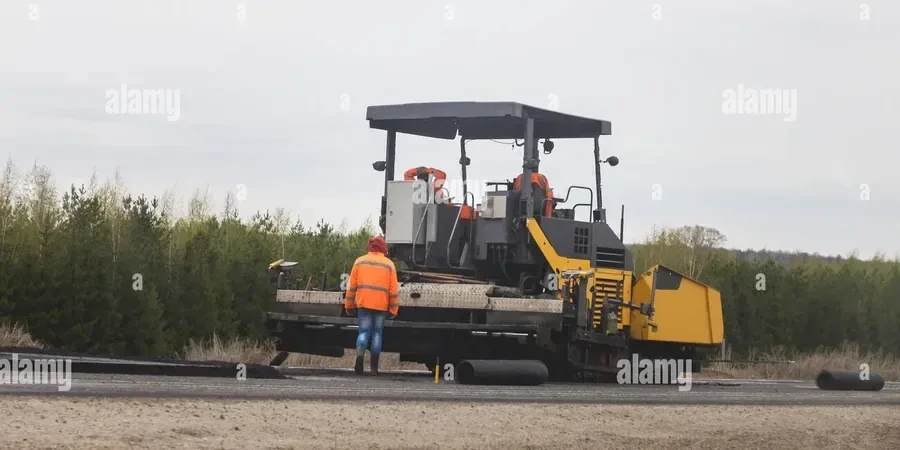
For Cincinnati's freeze-thaw climate and variable till subgrade, a generic 8-inch base often fails before year three without proper CBR verification.
Technical details of the service in Cincinnati
Critical ground factors in Cincinnati
A parking lot we reviewed in the West End had 50 mm of rutting after two seasons. The original design used a single 100 mm asphalt layer on compacted fill with no subgrade testing. During wet periods water trapped in the fill softened the subgrade to a CBR near 2%. The asphalt layer alone could not distribute the truck loading. We redesigned with a 200 mm granular base, a geotextile separator, and an edge drain system. The fix added cost but extended the pavement life from 3 to over 15 years. That is the real risk of skipping proper flexible pavement design — short service life and repeated rehabilitation.
This service complements our laboratory testing work for a complete project analysis.
Our services
We provide the full scope of work needed to define a durable pavement structure for Cincinnati conditions.
Subgrade Investigation & CBR Testing
Boreholes, undisturbed sampling, laboratory CBR and resilient modulus testing to characterize the glacial till subgrade across your site.
Traffic Load Analysis & ESAL Calculation
We classify traffic volumes, axle configurations, and growth factors to compute equivalent single-axle loads for the design period.
Structural Section Design (M-E Method)
Mechanistic-empirical analysis per AASHTOWare to determine layer thicknesses for surface, base, and subbase that meet fatigue and rutting criteria.
Common questions
What is the typical cost range for a flexible pavement design study in Cincinnati?
A full design study including subgrade investigation, traffic analysis, and structural section design typically runs between US$1,610 and US$4,520 depending on the number of borings, laboratory tests, and project complexity. Final cost is confirmed after scoping the site.
How deep should soil borings be for flexible pavement design in Cincinnati?
We recommend borings to at least 1.5 m below the proposed subgrade elevation — or to 1.5 times the frost penetration depth (about 0.9 m locally), whichever is greater. This captures the active zone where freeze-thaw and moisture changes affect subgrade modulus.
What subgrade CBR should I expect for glacial till soils in the Cincinnati area?
In-place CBR for the local Wisconsinan till typically ranges from 3% to 8%. Compacted fill or weathered zones can drop below 3%. We always verify with laboratory soaked CBR on undisturbed samples because visual estimates are unreliable.