Foundation engineering in Cincinnati demands a nuanced understanding of the region's complex geology, where glacial deposits, colluvial soils, and weathered shale bedrock create a challenging substrate for construction. This category encompasses the critical analysis, design, and remediation of structural foundations to ensure stability and longevity in the face of variable ground conditions. From high-rise developments in the central business district to residential expansions in hillside communities like Mount Adams, every project must contend with the legacy of the Wisconsin glaciation and subsequent erosion. Proper foundation design mitigates risks ranging from excessive settlement to bearing capacity failure, protecting both structural integrity and occupant safety.
Cincinnati's subsurface profile is dominated by the Ordovician-age Kope Formation, a notoriously unstable interbedded shale and limestone unit that weathers rapidly upon exposure. Overlying this bedrock are thick sequences of low-plasticity silt and clay loess, along with fill materials in older urban areas. The prevalence of these soils introduces significant challenges, including potential for differential settlement and poor natural bearing capacity. Moreover, the region contains pockets of expansive soils, particularly where weathered shale residuum retains high clay fractions. An expansive soil evaluation is often a prerequisite for any project, as seasonal moisture fluctuations can induce damaging heave and shrinkage cycles in lightly loaded structures.
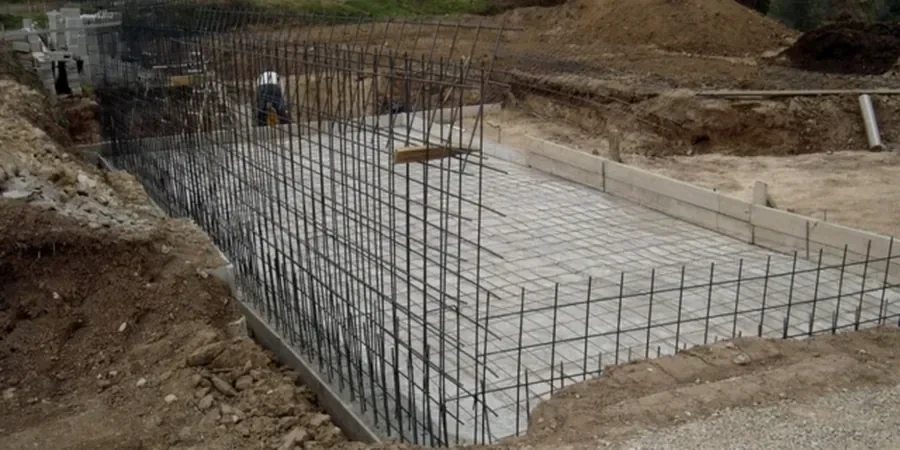
All foundation work in Cincinnati must comply with the Ohio Building Code (OBC), which incorporates the International Building Code (IBC) with state-specific amendments, alongside the City of Cincinnati's local ordinances. Chapter 18 of the OBC governs soils and foundations, mandating thorough geotechnical investigations that follow the standards set by the American Society of Civil Engineers (ASCE) and the Ohio EPA for stormwater and excavation management. These regulations require accurate determination of design parameters, such as allowable bearing pressure and predicted settlement magnitudes, directly tying into services like settlement analysis and bearing capacity analysis. Adherence to these codes is not merely procedural; it is a legal requirement enforced through permit reviews by the Cincinnati Department of Buildings and Inspections.
The types of projects that necessitate comprehensive foundation engineering are diverse. Large-scale commercial and mixed-use developments in areas like The Banks or Over-the-Rhine frequently require deep foundation solutions to bypass problematic urban fill, with micropile design proving invaluable in constrained access sites. Institutional buildings on the University of Cincinnati's campus often employ raft/mat foundation design to distribute loads uniformly over variable ground. Meanwhile, residential construction on the city's characteristic hillsides demands meticulous shallow foundation design to address slope stability and drainage concerns. Each project type demands a tailored approach, moving beyond generic solutions to address site-specific geohazards.
Common questions
What are the most common foundation-related challenges encountered in Cincinnati?
The primary challenges stem from the region's glacial geology and the Kope Formation bedrock. Issues include low bearing capacity in soft alluvial and colluvial soils, differential settlement between cut and fill sections on hillside lots, and the presence of expansive weathered shale residuum that can cause structural distress. Managing groundwater infiltration into excavations and designing for the rapid weathering of exposed shale are also critical concerns.
How does the local geology influence the choice between shallow and deep foundations in Cincinnati?
Geology is the decisive factor. Shallow foundations, such as spread footings, are suitable where competent native soil or rock is near the surface and settlement can be controlled. However, in areas with thick, undocumented urban fill, soft glacial lake deposits, or steep slopes, deep foundations like micropiles or drilled shafts are necessary to transfer loads to stable bedrock, bypassing the problematic upper strata.
What building codes and standards govern foundation design and construction in Cincinnati?
Foundation design is governed by the Ohio Building Code (OBC), based on the IBC, with local amendments enforced by the City of Cincinnati. The OBC's Chapter 18 specifies requirements for geotechnical investigations, allowable bearing pressures, and settlement limits. Relevant standards from ASCE, ACI, and the Ohio EPA also apply, particularly for concrete design and managing excavation spoils.
When is a comprehensive settlement analysis required for a project in Cincinnati?
A comprehensive settlement analysis is typically required for any structure that is sensitive to movement or where subsurface conditions are highly variable. This includes multi-story buildings, structures on compressible clay or fill, projects adjacent to existing buildings, and any site where the geotechnical investigation identifies a potential for total or differential settlement exceeding the OBC's serviceability limits.