Ground improvement in Cincinnati is not a luxury — it is a necessity driven by the region's complex glacial geology and urban development patterns. This category encompasses a suite of engineering techniques designed to modify the physical and mechanical properties of soil and rock, transforming marginal or problematic ground into a reliable bearing stratum. From dynamic compaction and grouting to advanced stabilization and drainage solutions, these methods address challenges ranging from loose fills and soft clays to organics and liquefiable deposits. For geotechnical engineers and contractors working in the Greater Cincinnati area, understanding when and how to apply these techniques is critical to project viability, foundation performance, and long-term structural integrity.
Cincinnati sits atop a layered sequence of glacial till, outwash deposits, and alluvial sediments overlying Ordovician limestone and shale bedrock. The Wisconsinan glaciation left behind a mantle of low- to moderate-plasticity silty clays interspersed with sand and gravel lenses, while the Ohio River valley contains thick accumulations of soft, compressible alluvium. These conditions frequently produce bearing capacity failures, excessive settlement, and slope instability in their untreated state. Moreover, urban infill sites often conceal undocumented fill materials, demolition debris, and organic silts that require targeted intervention. Without proper ground improvement, structures ranging from low-rise commercial buildings to heavy industrial facilities risk differential settlement and long-term maintenance burdens that far outweigh upfront site preparation costs.
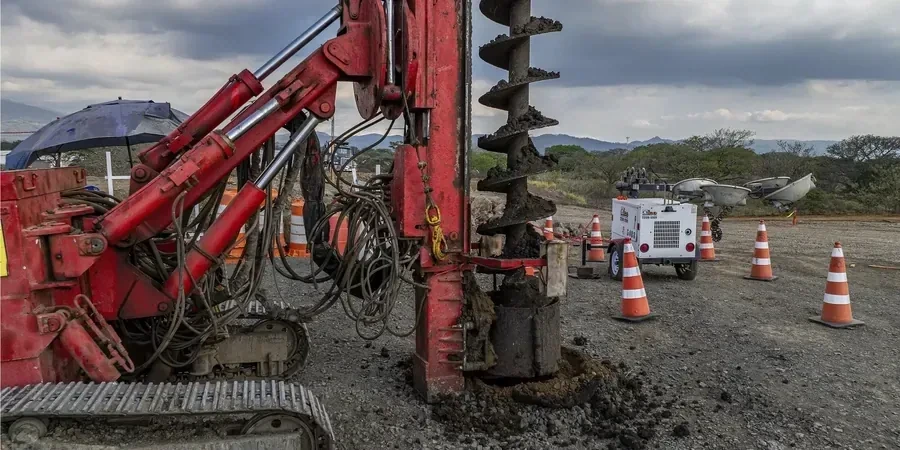
Regulatory compliance in Cincinnati follows the Ohio Building Code, which references the International Building Code (IBC) Chapter 18 for soils and foundations, along with local amendments enforced by the City of Cincinnati Department of Buildings and Inspections. Geotechnical investigations must conform to ASTM standards, and ground improvement designs typically require sealed reports from registered professional engineers. For transportation projects, the Ohio Department of Transportation (ODOT) Specifications for Geotechnical Work provide additional guidance on methods such as lime and cement stabilization and prefabricated vertical drain (PVD) design. Environmental considerations, particularly when dealing with organic soil management, may also trigger Ohio EPA oversight if contamination or wetland impacts are involved.
The types of projects that demand ground improvement in Cincinnati are diverse. Heavy industrial and warehouse developments in the Mill Creek Valley frequently encounter thick, soft deposits requiring preloading with PVDs or deep mixing. Hillside residential and institutional construction on the city's east and west sides often mandates compaction grouting or soil nailing to stabilize colluvial slopes. Infrastructure projects — including bridge approaches, retaining walls, and stormwater detention basins — routinely incorporate geogrid specification and geotextile specification for reinforcement and separation. Even small-footprint commercial pads on former brownfield sites benefit from dynamic compaction or jet grouting to homogenize variable subsurface conditions and mitigate future distress.
Available services
Dynamic compaction design
→ Ver detalleGeogrid specification
→ Ver detalleGeotextile specification
→ Ver detalleGrouting design
→ Ver detalleJet grouting design
→ Ver detalleLime and cement stabilization
→ Ver detalleOrganic soil management
→ Ver detallePrefabricated vertical drain (PVD) design
→ Ver detallePreloading design (without surcharge)
→ Ver detallePreloading with surcharge design
→ Ver detalleStone column design
→ Ver detalleUnsaturated soil analysis
→ Ver detalleVibrocompaction design
→ Ver detalleCommon questions
What is ground improvement and when is it needed in Cincinnati?
Ground improvement refers to engineered methods that alter soil properties to increase bearing capacity, reduce settlement, or mitigate liquefaction and slope instability. In Cincinnati, it is typically required when glacial till, alluvial clays, or undocumented urban fill cannot safely support proposed structural loads without treatment. A geotechnical investigation determines whether natural soils meet project performance criteria or require intervention.
How do Cincinnati's local soil conditions influence the choice of ground improvement technique?
Cincinnati's subsurface consists largely of Wisconsinan glacial deposits and Ohio River alluvium, creating highly variable conditions. Soft, compressible clays in valley bottoms often require preloading with vertical drains or deep mixing, while loose granular outwash may respond better to dynamic compaction. Hillside colluvium and limestone bedrock pinnacles demand grouting or stabilization approaches tailored to irregular interfaces and perched groundwater.
What regulatory standards govern ground improvement design in Ohio?
The Ohio Building Code, based on IBC Chapter 18, governs foundation and soil improvement work, requiring sealed designs by registered professional engineers. ODOT specifications apply to transportation projects, while ASTM standards control material testing and investigation protocols. The City of Cincinnati may impose additional permitting requirements, particularly when work affects adjacent structures, rights-of-way, or environmentally sensitive areas.
Can ground improvement eliminate deep foundations on a Cincinnati project?
In many cases, yes. Techniques such as dynamic compaction, jet grouting, or lime-cement stabilization can strengthen soils sufficiently to allow shallow footings instead of driven piles or drilled shafts. However, this depends on the depth and severity of the problematic soils, structural load requirements, and long-term settlement tolerances. An alternatives analysis comparing cost, schedule, and performance risk determines whether ground improvement can replace deep foundations.