The difference in ground conditions between downtown Cincinnati, sitting on weathered Ohio Shale and limestone, and the steep hillsides of Mount Adams or Over-the-Rhine is night and day. Downtown projects often encounter competent bedrock within 10–15 feet, while hillside sites can have colluvial soils, loose fill, and variable shale layers that make conventional shallow foundations risky. For those challenging slopes and tight urban lots, micropile design in Cincinnati has become the go-to solution — it transfers loads directly to competent strata without the need for large excavation. Before finalizing a micropile layout, we typically run a resistivity survey to map subsurface anomalies and confirm bedrock depth across the site.
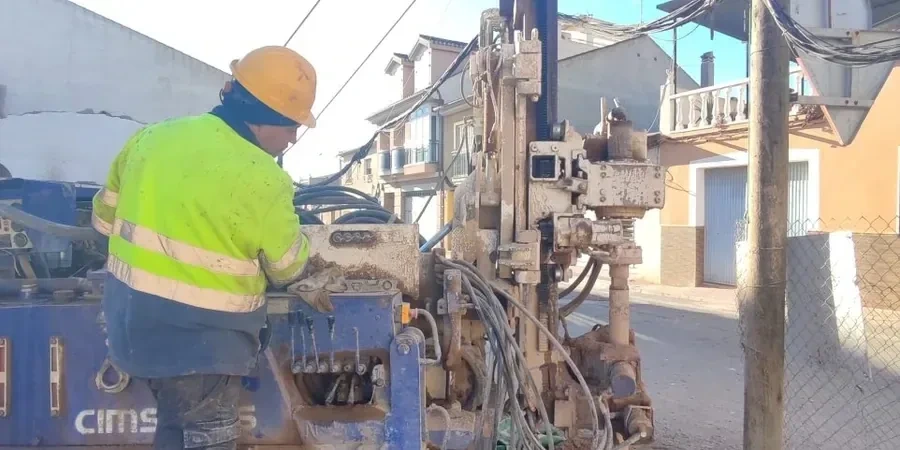
In Cincinnati hillside projects, micropiles transfer loads through colluvial fill and weathered shale directly into competent bedrock, typically at 15–40 feet depth.
Technical details of the service in Cincinnati
- Drilling through fill and weathered shale into competent bedrock (typically at 15–40 ft depth)
- Installing a central reinforcing bar (Grade 75 or 150 ksi)
- Pressure grouting the annulus to bond with the surrounding rock
- Testing every pile with a static load test per ASTM D1143
Critical ground factors in Cincinnati
Under the 2021 IBC and ASCE 7-16, any structure on a slope steeper than 3H:1V or within 50 feet of a descending slope face requires a geotechnical investigation that includes slope stability and foundation capacity. In Cincinnati, where neighborhoods like Mount Lookout and Price Hill are built on glaciated till over shale, ignoring the risk of differential settlement or shallow bedrock sliding can lead to structural distress. Micropile design in Cincinnati directly addresses these risks: by socketing piles into competent shale or limestone, we bypass the problematic upper soils and eliminate the settlement concern. We always cross-check our designs against the Ohio Department of Transportation foundation design guidelines for bridges, which have been adapted for building applications.
This service complements our laboratory testing work for a complete project analysis.
Our services
We offer three complementary services that support micropile design in Cincinnati, from investigation through verification.
Geotechnical Investigation for Micropiles
Boreholes drilled to bedrock (typically 20–50 ft) with SPT sampling per ASTM D1586, rock coring, and laboratory testing to determine unconfined compressive strength and modulus of the shale or limestone. We provide a design summary with recommended pile capacities and grout-to-rock bond values.
Structural Micropile Design & Detailing
Full engineering design including load combinations per IBC, pile layout plans, reinforcement schedules, and connection details to existing footings or grade beams. We coordinate with the structural engineer to ensure the pile cap design matches the micropile spacing and load distribution.
Load Testing & Verification
Static compression tests (ASTM D1143) on sacrificial test piles or working piles, with load increments up to 200% of design load. We also offer dynamic load testing (PDA) per ASTM D4945 for production piles when speed is critical.
Common questions
What is the typical cost range for micropile design in Cincinnati?
For a typical building project, micropile design fees in Cincinnati range between US$1,400 and US$3,960, depending on the number of test borings, laboratory testing, and structural design iterations. The total installed cost per pile (including drilling, reinforcing, grouting, and testing) typically falls between $150 and $300 per linear foot.
How deep do micropiles need to be in Cincinnati?
Depths vary by site. Downtown sites on Ohio Shale may require only 15–20 ft of drilling into rock. Hillside locations with colluvial fill and weathered shale often need 25–40 ft to reach competent bedrock. We determine the required depth based on the design load, rock quality (RQD), and grout-to-rock bond stress calculated from site-specific borehole data.
Can micropiles be installed inside an existing basement?
Yes. Low-headroom micropile rigs can operate with as little as 8 ft of vertical clearance. We have completed installations inside basements in Over-the-Rhine and downtown Cincinnati where headroom was limited to 10 ft. The process involves drilling through the existing slab, installing the pile, and then casting a new pile cap or connecting to the existing footing.
What is the difference between a micropile and a helical pile?
Micropiles are grouted elements that transfer load through skin friction and end bearing in rock or dense soil; they can achieve very high capacities (200+ kips). Helical piles rely on screw-like plates for tension and compression capacity and are typically limited to lighter loads (under 100 kips) and less competent soils. For Cincinnati hillside projects with high lateral loads or deep fill, micropiles are almost always the better choice.
What standards govern micropile design in Cincinnati?
Design follows the 2021 IBC, ASCE 7-16, and the FHWA-NHI-16-072 manual. Load testing is performed per ASTM D1143 (static) or ASTM D4945 (dynamic). The structural steel reinforcing bars must meet ASTM A615 or A722, and the grout compressive strength is typically specified at 4,000 psi minimum at 28 days.