A common mistake we see from contractors in Cincinnati is assuming the stiff blue clay found across most sites is uniform. It isn't. The glacial till left by the Wisconsin glaciation creates a highly variable profile: lenses of sand, pockets of silt, and buried organic layers are common. Without a proper soil mechanics study, a foundation designed for a consistent bearing stratum can end up partially on soft alluvium. We've corrected several post-tension slab designs on the east side where the clay's plasticity index varied by 20 points across the same lot. A thorough laboratory program, including Atterberg limits and unconfined compression, catches these anomalies before concrete is poured, saving weeks of rework.
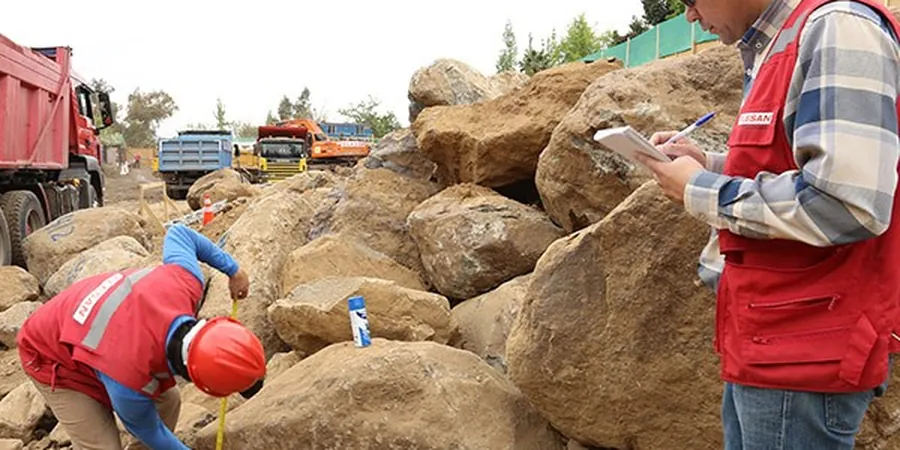
A 20-point variation in plasticity index across a single lot is common in Cincinnati's glacial till — a soil mechanics study catches it before the foundation is poured.
Technical details of the service in Cincinnati
Critical ground factors in Cincinnati
A 10-story apartment building in the West End was designed with a mat foundation assuming uniform clay support. The soil mechanics study revealed a buried stream channel filled with loose sand and organic silt running diagonally across the site. Without that study, differential settlements of over 2 inches would have cracked the shear walls within the first year. We recommended deep foundations (auger-cast piles) through the channel and a transition slab on the clay side. The owner avoided a multimillion-dollar retrofit. That's the real cost of skipping geotechnical investigation in Cincinnati — hidden geology that only emerges after the drywall goes up.
This service complements our laboratory testing work for a complete project analysis.
Our services
Our soil mechanics study in Cincinnati covers the full spectrum of field investigation and laboratory testing, tailored to the local geology of glacial till, alluvium, and weathered bedrock.
Borehole Drilling & SPT Sampling
We drill test borings to depths of 30 to 60 feet using hollow-stem augers, performing Standard Penetration Tests at 2.5-foot intervals per ASTM D1586. Split-spoon samples are logged and bagged for lab classification.
Laboratory Classification & Strength Testing
Our accredited lab runs grain-size distribution (ASTM D6913), Atterberg limits, natural moisture content, and unconfined compression tests on every significant stratum. We also perform CU triaxial tests on undisturbed Shelby tube samples for shear strength parameters.
Foundation Recommendations & Report
We deliver a signed geotechnical report with allowable bearing capacity, settlement estimates, site class per ASCE 7, and recommendations for foundation type, drainage, and subgrade preparation. All data is presented in CAD-ready cross sections.
Common questions
How much does a soil mechanics study cost in Cincinnati?
A standard residential soil mechanics study (2 borings to 20 feet, lab tests, and report) ranges from US$3.050 to US$5.940, depending on access, number of borings, and required laboratory testing. Commercial projects with deeper borings, triaxial testing, and settlement analysis typically fall at the higher end.
What is the difference between N-SPT and bearing capacity in Cincinnati soils?
N-SPT measures the blow count needed to drive a sampler 12 inches — it's a measure of soil density or consistency, not directly bearing capacity. For Cincinnati's stiff clay, we correlate N-values (typically 15–30) to undrained shear strength using empirical relationships (Terzaghi-Peck), then apply a factor of safety to derive allowable bearing capacity. The correlation varies with moisture content and plasticity, so direct lab testing on undisturbed samples is always preferred for final design.
When should I order a soil mechanics study during the design process?
Order the study as soon as the site layout is roughly defined, ideally before structural design begins. In Cincinnati, the presence of buried stream channels, old fill, or variable clay thickness can change the foundation type from shallow spread footings to deep piles. Waiting until after the building permit is issued often forces costly redesign and delays. We recommend scheduling borings at least 4–6 weeks before the structural engineer's foundation design deadline.