Cincinnati sits on a complex mix of glacial till, alluvial deposits from the Ohio River, and weathered shale bedrock. That variability means soil conditions can shift dramatically within a single block. Our field crews use the Standard Penetration Test to capture reliable N-values at every depth interval, giving engineers the raw data they need to design foundations that actually match the ground. We follow ASTM D1586 to the letter, recording blow counts, recovery, and sample description on every run. Before we mobilize a rig, we check site access and utility clearances — it keeps the operation smooth and safe.
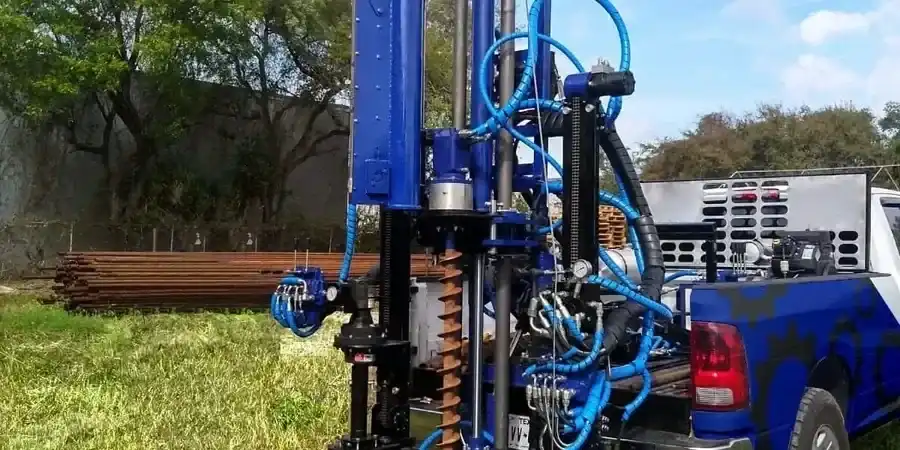
A single SPT bore can reveal a loose zone at 12 feet that would have caused differential settlement under a 3-story load.
Technical details of the service in Cincinnati
Critical ground factors in Cincinnati
Cincinnati experiences humid continental weather with freeze-thaw cycles that can alter near-surface soil structure. A winter thaw followed by spring rains reduces bearing capacity in silty clays. If your SPT program only samples dry-season conditions, you might miss that seasonal weakness. We schedule our field campaigns to capture representative moisture states and note groundwater depth on every log. For sites near the Ohio River floodplain, we also coordinate with infiltración testing to assess permeability before designing drainage or stormwater systems. That layered approach prevents surprises when the ground saturates.
This service complements our laboratory testing work for a complete project analysis.
Our services
We offer a complete SPT service package tailored to Cincinnati's varied geology. Each option includes field execution, sample logging, and a certified report within 5 working days.
Residential SPT for Small Lots
Single-bore investigations for house additions, garage pads, or retaining walls. We mobilize a compact track rig that fits through standard gates and leaves minimal turf damage. N-values every 5 feet to refusal or target depth.
Commercial Multi-Bore Programs
Grid-pattern SPT arrays for apartment buildings, warehouses, and parking structures. We coordinate with your structural engineer to space boreholes per IBC requirements and provide raw data compatible with LPILE or SHAFT analysis.
Deep Foundation Verification
SPT at depths exceeding 50 feet to evaluate bearing strata for driven piles or drilled shafts. We log refusal criteria and sample rock sockets in weathered shale. Reports include side friction estimates per FHWA methods.
Common questions
How does the Standard Penetration Test work on a typical Cincinnati site?
We drill a borehole to the desired depth, lower a split-spoon sampler, and drive it 18 inches with a 140 lb hammer falling 30 inches. The number of blows required for the last 12 inches is the N-value. That number directly correlates with soil density or consistency. We repeat this at regular intervals — usually every 5 feet — until we hit refusal or target depth. The entire process takes about 2 hours per borehole in glacial till.
What is the difference between N-SPT and corrected N60 values?
Raw N-values are affected by hammer efficiency, rod length, and overburden pressure. N60 adjusts for a standard 60% hammer energy, which removes the variability between different rigs. Our reports include both raw N and N60, plus corrections for rod length when bores exceed 30 feet. Engineers use N60 for liquefaction screening and bearing capacity calculations per ASCE 7.
How much does an SPT in Cincinnati cost?
A single-bore residential SPT typically ranges from US$520 to US$740 depending on depth, access, and whether you need a same-day turn. Multi-bore commercial programs lower the per-bore rate. We provide a fixed-price quote after a quick site visit — no hidden fees for mobilization or sample transport.
When should I order an SPT instead of a CPT or hand auger?
Use SPT when you need physical soil samples for lab classification, or when the ground contains gravel or cobbles that stall a CPT cone. Hand augers only reach about 6 feet in Cincinnati clay — too shallow for foundation design. SPT reaches 30 to 100 feet, recovers a sample at every interval, and produces N-values directly usable in bearing capacity formulas. For deep foundations, SPT remains the standard.